
News, School News

Early school data for year shows rise in student reading skills, struggles with math

by Kate Shunney

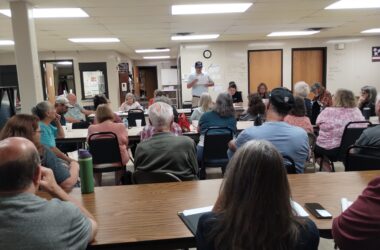
Morgan County Schools’ directors for elementary and secondary education updated Board of Education members last week about the results of beginning of the year testing of student subject mastery, pointing to reading highlights and struggles with math.

Elementary Education Director Summer McClintock shared data charts with board members on October 21, pointing to an increase in reading skills at the beginning of this school year versus the 2024 fall term in second and fourth graders.

McClintock summarized grade level and subject level testing data for K-5th grade students, saying “about 50/50 students are on target or higher” against state and national subject mastery figures.

Morgan County’s first graders, she said, tested a “little less” than U.S. and state first graders on subject mastery this year.

At the beginning of the year, 23% of Morgan County students in K-5th grade had reading skills at or above the grade level they’re enrolled in. Another 49% tested one grade level below their enrolled grade, and 29% had reading skills two to three grade levels below their enrolled grade.

That last data point is better than the state average, where 34% of West Virginia students had reading skills two to three grade levels below their enrolled grade. In West Virginia, 27% of students had reading skills at or above their grade level at the beginning of the year.

In math, Morgan County K-5th grade students were below West Virginia skill mastery averages. This year, 12% of K-5 students have math skills at or above their enrolled grade level, which is 4% lower than West Virginia elementary students overall. Another 59% of Morgan County elementary students have math skills one grade level below their enrolled grade, and 29% have math skills two or three grade levels below their assigned grade. That last data point is better than the state average, which shows 32% of West Virginia elementary students two or three grades below in skill mastery.

“We do know that as a county we are stronger with reading than math,” said McClintock.

She noted that the state’s emphasis on third grade reading mastery at grade level has focused efforts and resources for that goal.

“We’re moving in the right direction,” she said, pointing to upward increases in multiple reading skills that go into overall reading mastery.

School board member Laura Smith inquired about the county’s alignment with that state reading law.

“What year do we start holding third graders back?” Smith asked McClintock.

McClintock said starting in the 2026-2027 school year, there would be cutoff scores that would guide schools about which students might be retained if their reading skills were well below grade level in third grade.

Board president Aaron Close noted that the beginning of the year skill data compared mastery across several grade levels, rather than in student groups.

“We’re comparing different students but getting insight into instruction,” McClintock said.

She told school board members that instructional teams are aware where more targeted teaching is needed to raise reading and math skills.

“We know who those students are, where they are and what they need,” she said.

At the higher grade levels, 30% of Morgan County students are above grade level for English Language skills, according to the beginning of the year data, said Secondary Education Director Beth Golden.

Another 15% of students had English Language skills at the grade level they were assigned. Beginning of the Year testing showed that 52% of county students in grades 6-8 had English Language skills below or far below their grade level.

In math, 30% of Morgan County students were on or above grade level and 67% were below or far below grade level on math proficiency at the beginning of the year.

Golden said the county has shown a 6% increase in proficiency over the 2024 fall testing.

She summarized the trends locally, saying the sixth-grade students are coming in with math skills about a year behind.

“Generally, we’re seeing a year’s worth of growth in a year, but we need a year and a half of growth to catch them up,” she said. “It’s pretty clear we need to work on math in secondary grades.”

Once students get to the higher grades, they take different skill testing aligned with the PSAT and College Board.

Board president Close asked about tools like IXL, which is a computer program that tests and instructs students in response to their individual skill level.

Golden said that’s a good tool, which has the county’s chosen math textbooks embedded in its lessons to align the work for students.

Close said if the tool is working, is the shortage of certified math teachers the county’s main challenge?

Jeromey Duelley said that in the middle school, about 40% to 50% of classrooms have certified teachers. At the high school, that figure is about 20%.

Superintendent David Banks said Paw Paw is using a new model – utilizing West Virginia Virtual School for some classes with a local course facilitator in the room with students.

“I think it’s a model to consider if we continue to have challenges getting certified teachers,” said Banks.

“We know math teachers are hard to come by,” Close said. “I wanted to know if the issue is the tool or the teachers.”

Superintendent Banks said professional development is certainly needed for new teachers beyond content to include things like classroom management that impact learning.

“I’m anxious to see how the middle of the year data looks,” said Close.


Facebook

Weather

BERKELEY SPRINGS WEATHER