



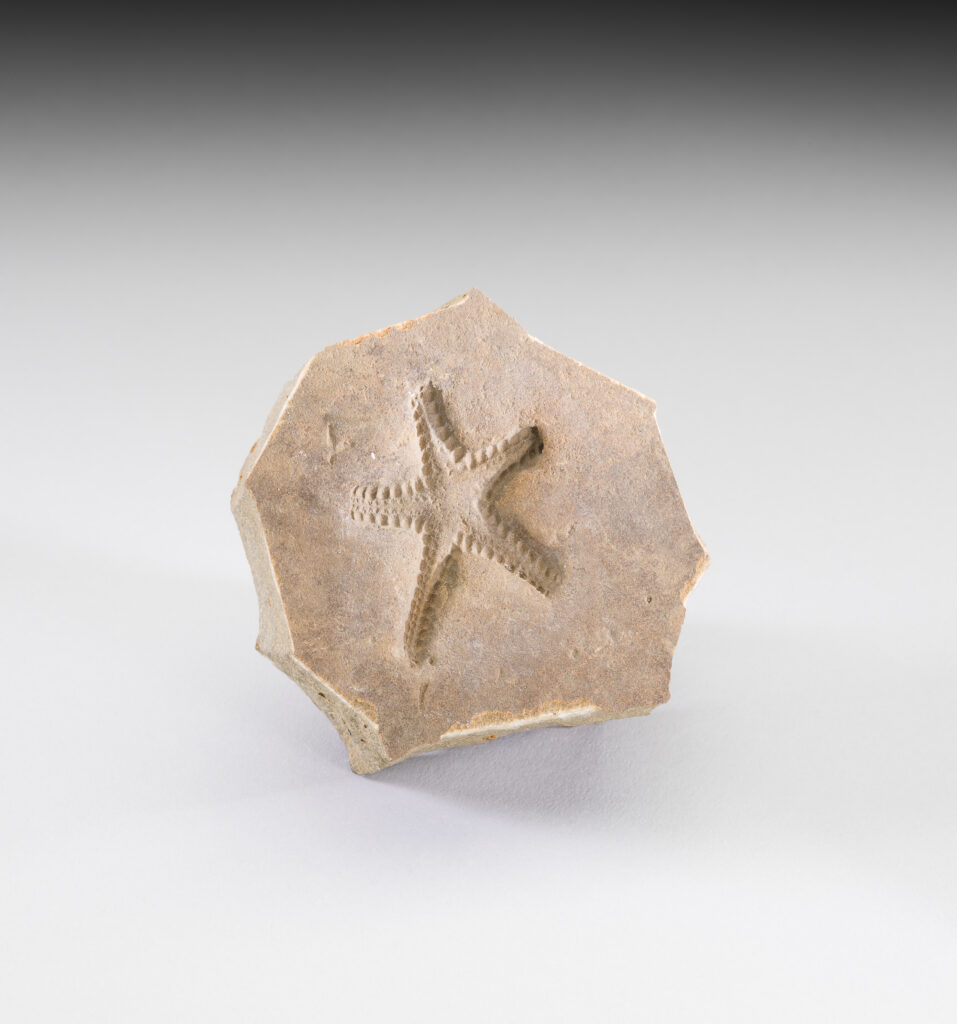
A prehistoric fossil found in West Virginia is one of 600 rare objects on display from the 50 U.S. states and territories in the Smithsonian National Museum of Natural History new exhibit, “From These Lands: Sharing Our Natural and Cultural Heritage.” The exhibition commemorates America’s 250th anniversary through rare objects and specimens representing all 50 states, the District of Columbia, and the five U.S. territories.
Drawn from the museum’s collection of more than 148 million artifacts and specimens, the 5,000-square-foot exhibition explores the people, landscapes, discoveries, traditions, and defining moments that have shaped the United States across millions of years of natural and cultural history. Many of the objects on display have rarely or never before been exhibited publicly.
Sea star
Representing West Virginia in the exhibition is a fossil sea star, one of nine objects from the state featured in the “From These Lands” exhibition.
EZID: http://n2t.net/ark:/65665/33c0673d3-6c3a-4cfd-867a-fc1daef3da72
The lands known as the United States were not always land. Continents took billions of years to move into their current positions.
This fossil sea star (Devonaster sp.), discovered in West Virginia, lived between 419 and 359 million years ago, when warm, shallow seas covered much of the continents.
Sea stars first evolved about 480 million years ago and today inhabit every ocean basin, rocky tidepools, sandy seafloors and abyssal muck. But they cannot be found in West Virginia anymore.
The exhibition highlights the unique natural, cultural, scientific, and historical contributions connected to West Virginia and is expected to be viewed by millions of visitors from around the world during its multi-year engagement in Washington, D.C.
“This exhibition brings the entire country into one gallery,” said Kirk Johnson, Sant Director of the Smithsonian’s National Museum of Natural History. “As the country marks its 250th anniversary, ‘From These Lands’ presents an opportunity to celebrate the diversity of our landscapes, the depth of our history and the connections that link people and the natural world across borders.”


